Reference cells
The reference cells are used to i) define grid cells, ii) define shape functions, and iii) define quadrature rules. The numbering of vertices, edges, faces are visualized below. See also FerriteViz.elementinfo.
Numbering and identification of entities
The local numbering of vertices, edges, and faces, on the reference cells, specifies, for example, the cell node order, and the order in which interpolations distribute their DoFs. It is important for internal consistency and correctness that the the same convention is used everywhere. The convention adopted by Ferrite.jl is documented below for each reference cell.
Edges are identified by the 2-tuple of vertices that the edge connects, $(v_i, v_j)$, where the order of the vertices defines the direction of the edge.
Faces are identified by the n-tuple of vertices constructing the face, $(v_i, v_j, v_k, ...)$, in anti-clockwise order when viewing the face from the outside of the reference cell (i.e. such that the implied face normal points out of the cell).
Reference cell implementations
Reference line

Vertex coordinates
\[\boldsymbol{\xi}_1 = (-1, ), \quad \boldsymbol{\xi}_2 = ( 1, )\]
Edge identifiers
\[e_1 = (v_1, v_2)\]
Reference triangle
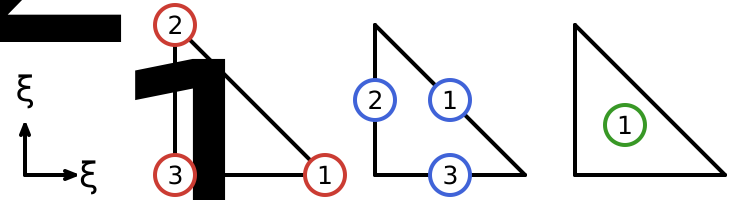
Vertex coordinates
\[\boldsymbol{\xi}_1 = (1, 0), \quad \boldsymbol{\xi}_2 = (0, 1), \quad \boldsymbol{\xi}_3 = (0, 0)\]
Edge identifiers
\[e_1 = (v_1, v_2), \quad e_2 = (v_2, v_3), \quad e_3 = (v_3, v_1)\]
Face identifier
\[f_1 = (v_1, v_2, v_3)\]
Reference quadrilateral
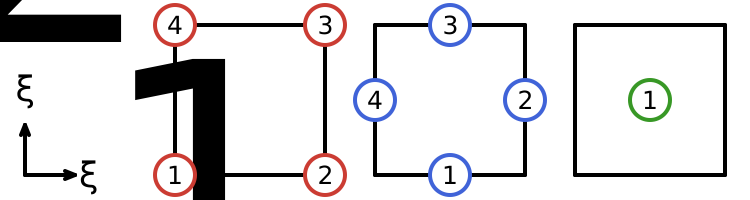
Vertex coordinates
\[\boldsymbol{\xi}_1 = (-1, -1), \quad \boldsymbol{\xi}_2 = ( 1, -1), \quad \boldsymbol{\xi}_3 = ( 1, 1), \quad \boldsymbol{\xi}_4 = (-1, 1)\]
Edge identifiers
\[e_1 = (v_1, v_2), \quad e_2 = (v_2, v_3), \quad e_3 = (v_3, v_4), \quad e_4 = (v_4, v_1)\]
Face identifier
\[f_1 = (v_1, v_2, v_3, v_4)\]
Reference tetrahedron
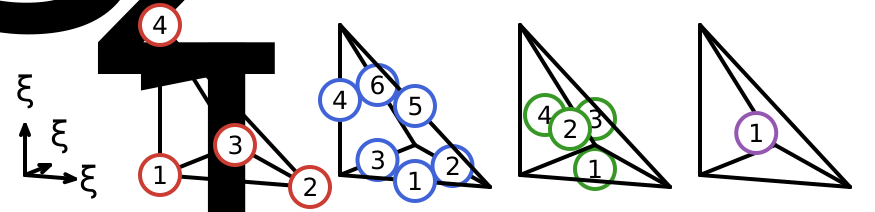
Vertex coordinates
\[\boldsymbol{\xi}_1 = (0, 0, 0), \quad \boldsymbol{\xi}_2 = (1, 0, 0), \quad \boldsymbol{\xi}_3 = (0, 1, 0), \quad \boldsymbol{\xi}_4 = (0, 0, 1)\]
Edge identifiers
\[e_1 = (v_1, v_2), \quad e_2 = (v_2, v_3), \quad e_3 = (v_3, v_1), \quad e_4 = (v_1, v_4), \quad e_5 = (v_2, v_4), \quad e_6 = (v_3, v_4)\]
Face identifiers
\[f_1 = (v_1, v_3, v_2), \quad f_2 = (v_1, v_2, v_4), \quad f_3 = (v_2, v_3, v_4), \quad f_4 = (v_1, v_4, v_3)\]
Reference hexahedron

Vertex coordinates
\[\boldsymbol{\xi}_1 = (-1, -1, -1), \quad \boldsymbol{\xi}_2 = ( 1, -1, -1), \quad \boldsymbol{\xi}_3 = ( 1, 1, -1), \quad \boldsymbol{\xi}_4 = (-1, 1, -1), \\ \boldsymbol{\xi}_5 = (-1, -1, 1), \quad \boldsymbol{\xi}_6 = ( 1, -1, 1), \quad \boldsymbol{\xi}_7 = ( 1, 1, 1), \quad \boldsymbol{\xi}_8 = (-1, 1, 1)\]
Edge identifiers
\[e_1 = (v_1, v_2), \quad e_2 = (v_2, v_3), \quad e_3 = (v_3, v_4), \quad e_4 = (v_4, v_1), \quad e_5 = (v_5, v_6), \quad e_6 = (v_6, v_7), \\ e_7 = (v_7, v_8), \quad e_8 = (v_8, v_5), \quad e_9 = (v_1, v_5), \quad e_{10} = (v_2, v_6), \quad e_{11} = (v_3, v_7), \quad e_{12} = (v_4, v_8)\]
Face identifiers
\[f_1 = (v_1, v_4, v_3, v_2), \quad f_2 = (v_1, v_2, v_6, v_5), \quad f_3 = (v_2, v_3, v_7, v_6), \\ f_4 = (v_3, v_4, v_8, v_7), \quad f_5 = (v_1, v_5, v_8, v_4), \quad f_6 = (v_5, v_6, v_7, v_8)\]
Reference prism
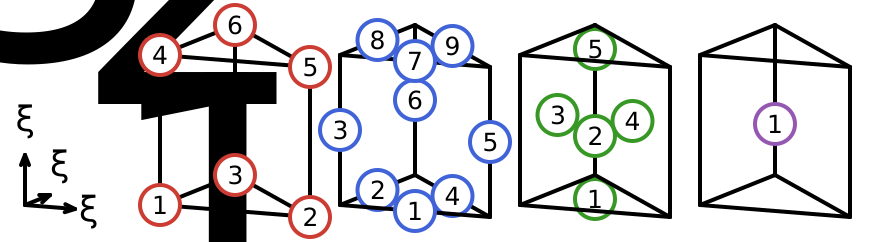
Vertex coordinates
\[\boldsymbol{\xi}_1 = (0, 0, 0), \quad \boldsymbol{\xi}_2 = (1, 0, 0), \quad \boldsymbol{\xi}_3 = (0, 1, 0), \\ \boldsymbol{\xi}_4 = (0, 0, 1), \quad \boldsymbol{\xi}_5 = (1, 0, 1), \quad \boldsymbol{\xi}_6 = (0, 1, 1)\]
Edge identifiers
\[e_1 = (v_2, v_1), \quad e_2 = (v_1, v_3), \quad e_3 = (v_1, v_4), \quad e_4 = (v_3, v_2), \quad e_5 = (v_2, v_5), \\ e_6 = (v_3, v_6), \quad e_7 = (v_4, v_5), \quad e_8 = (v_4, v_6), \quad e_9 = (v_6, v_5)\]
Face identifiers
\[f_1 = (v_1, v_3, v_2), \quad f_2 = (v_1, v_2, v_5, v_4), \quad f_3 = (v_3, v_1, v_4, v_6), \\ f_4 = (v_2, v_3, v_6, v_5), \quad f_5 = (v_4, v_5, v_6)\]
Reference pyramid

Vertex coordinates
\[\boldsymbol{\xi}_1 = (0, 0, 0), \quad \boldsymbol{\xi}_2 = (1, 0, 0), \quad \boldsymbol{\xi}_3 = (0, 1, 0), \\ \boldsymbol{\xi}_4 = (1, 1, 0), \quad \boldsymbol{\xi}_5 = (0, 0, 1)\]
Edge identifiers
\[e_1 = (v_1, v_2), \quad e_2 = (v_1, v_3), \quad e_3 = (v_1, v_5), \quad e_4 = (v_2, v_4), \\ e_5 = (v_2, v_5), \quad e_6 = (v_4, v_3), \quad e_7 = (v_3, v_5), \quad e_8 = (v_4, v_5)\]
Face identifiers
\[f_1 = (v_1, v_3, v_4, v_2), \quad f_2 = (v_1, v_2, v_5), \quad f_3 = (v_1, v_5, v_3), \\ f_4 = (v_2, v_4, v_5), \quad f_5 = (v_3, v_5, v_4)\]
AbstractRefShape subtypes
Ferrite.AbstractRefShape — Type
AbstractRefShape{refdim}Supertype for all reference shapes with reference dimension refdim. Reference shapes are used to define grid cells, interpolations, and quadrature rules.
Currently implemented reference shapes are: RefLine, RefTriangle, RefQuadrilateral, RefTetrahedron, RefHexahedron, RefPrism, and RefPyramid.
Examples
# Create a 1st order Lagrange interpolation on the reference triangleinterpolation = Lagrange{2, RefTriangle, 1}()# Create a 2nd order quadrature rule for the reference quadrilateralquad_rule = Quadrature{2, RefQuadrilateral}(2)Implementation details can be found in the devdocs section on Reference cells.
Ferrite.RefSimplex — Type
RefSimplex{dim} <: AbstractRefShape{dim}Reference shape for a dim-dimensional simplex. See AbstractRefShape documentation for details.
Ferrite.RefHypercube — Type
RefHypercube{dim} <: AbstractRefShape{dim}Reference shape for a dim-dimensional hypercube. See AbstractRefShape documentation for details.
Ferrite.RefLine — Type
RefLine <: AbstractRefShape{1}Reference line/interval, alias for RefHypercube{1}. See AbstractRefShape documentation for details.
Extended help
----------------+--------------------Vertex numbers: | Vertex coordinates: 1-------2 | v1: 𝛏 = (-1.0,) --> ξ₁ | v2: 𝛏 = ( 1.0,)----------------+--------------------Edge numbers: | Edge identifiers: +---1---+ | e1: (v1, v2)----------------+--------------------Ferrite.RefTriangle — Type
RefTriangle <: AbstractRefShape{2}Reference triangle, alias for RefSimplex{2}. See AbstractRefShape documentation for details.
Extended help
----------------+--------------------Vertex numbers: | Vertex coordinates: 2 | | \ | v1: 𝛏 = (1.0, 0.0) | \ | v2: 𝛏 = (0.0, 1.0)ξ₂^ | \ | v3: 𝛏 = (0.0, 0.0) | 3-------1 | +--> ξ₁ |----------------+--------------------Edge numbers: | Edge identifiers: + | | \ | e1: (v1, v2) 2 1 | e2: (v2, v3) | \ | e3: (v3, v1) +---3---+ |----------------+--------------------Face numbers: | Face identifiers: + | | \ | | \ | f1: (v1, v2, v3) | 1 \ | +-------+ |----------------+--------------------Ferrite.RefQuadrilateral — Type
RefQuadrilateral <: AbstractRefShape{2}Reference quadrilateral, alias for RefHypercube{2}. See AbstractRefShape documentation for details.
Extended help
----------------+---------------------Vertex numbers: | Vertex coordinates: 4-------3 | | | | v1: 𝛏 = (-1.0, -1.0) | | | v2: 𝛏 = ( 1.0, -1.0)ξ₂^ | | | v3: 𝛏 = ( 1.0, 1.0) | 1-------2 | v4: 𝛏 = (-1.0, 1.0) +--> ξ₁ |----------------+---------------------Edge numbers: | Edge identifiers: +---3---+ | e1: (v1, v2) | | | e2: (v2, v3) 4 2 | e3: (v3, v4) | | | e4: (v4, v1) +---1---+ |----------------+---------------------Face numbers: | Face identifiers: +-------+ | | | | | 1 | | f1: (v1, v2, v3, v4) | | | +-------+ |----------------+---------------------Ferrite.RefTetrahedron — Type
RefTetrahedron <: AbstractRefShape{3}Reference tetrahedron, alias for RefSimplex{3}. See AbstractRefShape documentation for details.
Extended help
---------------------------------------+-------------------------Vertex numbers: | Vertex coordinates: 4 4 | ^ ξ₃ / \ /| \ | v1: 𝛏 = (0.0, 0.0, 0.0) | / \ / | \ | v2: 𝛏 = (1.0, 0.0, 0.0) +-> ξ₂ / \ / 1___ \ | v3: 𝛏 = (0.0, 1.0, 0.0) / / __--3 / / __‾-3 | v4: 𝛏 = (0.0, 0.0, 1.0)ξ₁ 2 __--‾‾ 2/__--‾‾ |---------------------------------------+-------------------------Edge numbers: | Edge identifiers: + + | e1: (v1, v2) / \ /| \ | e2: (v2, v3) 5 / \ 6 5 / |4 \ 6 | e3: (v3, v1) / \ / +__3 \ | e4: (v1, v4) / __--+ / /1 __‾-+ | e5: (v2, v4) + __--‾‾2 +/__--‾‾2 | e6: (v3, v4)---------------------------------------+-------------------------Face numbers: | Face identifiers: + + | / \ /| \ | f1: (v1, v3, v2) / \ / | 4 \ | f2: (v1, v2, v4) / 3 \ /2 +___ \ | f3: (v2, v3, v4) / __--+ / / 1 __‾-+ | f4: (v1, v4, v3) + __--‾‾ +/__--‾‾ |---------------------------------------+-------------------------Ferrite.RefHexahedron — Type
RefHexahedron <: AbstractRefShape{3}Reference hexahedron, alias for RefHypercube{3}. See AbstractRefShape documentation for details.
Extended help
-----------------------------------------+-----------------------------Vertex numbers: | Vertex coordinates: 5--------8 5--------8 | v1: 𝛏 = (-1.0, -1.0, -1.0) / /| /| | | v2: 𝛏 = ( 1.0, -1.0, -1.0) / / | / | | | v3: 𝛏 = ( 1.0, 1.0, -1.0) ^ ξ₃ 6--------7 | 6 | | | v4: 𝛏 = (-1.0, 1.0, -1.0) | | | 4 | 1--------4 | v5: 𝛏 = (-1.0, -1.0, 1.0) +-> ξ₂ | | / | / / | v6: 𝛏 = ( 1.0, -1.0, 1.0) / | |/ |/ / | v7: 𝛏 = ( 1.0, 1.0, 1.0)ξ₁ 2--------3 2--------3 | v8: 𝛏 = (-1.0, 1.0, 1.0)-----------------------------------------+-----------------------------Edge numbers: | Edge identifiers: +----8---+ +----8---+ | 5/ /| 5/| | | e1: (v1, v2), e2: (v2, v3) / 7/ |12 / |9 12| | e3: (v3, v4), e4: (v4, v1) +----6---+ | + | | | e5: (v5, v6), e6: (v6, v7) | | + | +---4----+ | e7: (v7, v8), e8: (v8, v5) 10| 11| / 10| /1 / | e9: (v1, v5), e10: (v2, v6) | |/3 |/ /3 | e11: (v3, v7), e12: (v4, v8) +---2----+ +---2----+ |-----------------------------------------+-----------------------------Face numbers: | Face identifiers: +--------+ +--------+ | / 6 /| /| | | f1: (v1, v4, v3, v2) / / | / | 5 | | f2: (v1, v2, v6, v5) +--------+ 4| + | | | f3: (v2, v3, v7, v6) | | + |2 +--------+ | f4: (v3, v4, v8, v7) | 3 | / | / / | f5: (v1, v5, v8, v4) | |/ |/ 1 / | f6: (v5, v6, v7, v8) +--------+ +--------+ |-----------------------------------------+-----------------------------Ferrite.RefPrism — Type
RefPrism <: AbstractRefShape{3}Reference prism. See AbstractRefShape documentation for details.
Extended help
-----------------------------------------+----------------------------Vertex numbers: | Vertex coordinates: 4-------/6 4--------6 | / / | /| | | v1: 𝛏 = (0.0, 0.0, 0.0) / / | / | | | v2: 𝛏 = (1.0, 0.0, 0.0) ^ ξ₃ 5 / | 5 | | | v3: 𝛏 = (0.0, 1.0, 0.0) | | /3 | 1-------/3 | v4: 𝛏 = (0.0, 0.0, 1.0) +-> ξ₂ | / | / / | v5: 𝛏 = (1.0, 0.0, 1.0) / | / |/ / | v6: 𝛏 = (0.0, 1.0, 1.0)ξ₁ 2 / 2 / |-----------------------------------------+----------------------------Edge numbers: | Edge identifiers: +---8---/+ +---8----+ | 7/ / | 7/| | | e1: (v2, v1), e2: (v1, v3) / / 9 |6 / |3 |6 | e3: (v1, v4), e4: (v3, v2) + / | + | | | e5: (v2, v5), e6: (v3, v6) | /+ | +--2----/+ | e7: (v4, v5), e8: (v4, v6) 5| / 5| /1 / | e9: (v6, v5) | / 4 |/ / 4 | + / + / |-----------------------------------------+----------------------------Face numbers: | Face identifiers: +-------/+ +--------+ | / 5 / | /| | | f1: (v1, v3, v2) / / | / | 3 | | f2: (v1, v2, v5, v4) + / | + | | | f3: (v3, v1, v4, v6) | 4 /+ |2 +-------/+ | f4: (v2, v3, v6, v5) | / | / 1 / | f5: (v4, v5, v6) | / |/ / | + / + / |-----------------------------------------+----------------------------Ferrite.RefPyramid — Type
RefPyramid <: AbstractRefShape{3}Reference pyramid. See AbstractRefShape documentation for details.
Extended help
The base is a quadrilateral (vertices v1–v4) and v5 is the apex, located directly above v1.
-----------------------------------------+----------------------------Vertex coordinates: | Edge identifiers: | v1: 𝛏 = (0.0, 0.0, 0.0) | e1: (v1, v2), e2: (v1, v3) v2: 𝛏 = (1.0, 0.0, 0.0) | e3: (v1, v5), e4: (v2, v4) v3: 𝛏 = (0.0, 1.0, 0.0) | e5: (v2, v5), e6: (v4, v3) v4: 𝛏 = (1.0, 1.0, 0.0) | e7: (v3, v5), e8: (v4, v5) v5: 𝛏 = (0.0, 0.0, 1.0) | | Face identifiers: | f1: (v1, v3, v4, v2) (base) | f2: (v1, v2, v5) | f3: (v1, v5, v3) | f4: (v2, v4, v5) | f5: (v3, v5, v4)-----------------------------------------+----------------------------Required methods to implement for all subtypes of AbstractRefShape to define a new reference shape
Ferrite.reference_vertices — Method
reference_vertices(::Type{<:AbstractRefShape})
reference_vertices(::AbstractCell)
Returns a tuple of integers containing the local node indices corresponding to the vertices (i.e. corners or endpoints) of the cell.
Ferrite.reference_edges — Method
reference_edges(::Type{<:AbstractRefShape})
reference_edges(::AbstractCell)
Returns a tuple of 2-tuples containing the ordered local node indices (corresponding to the vertices) that define an edge.
Ferrite.reference_faces — Method
reference_faces(::Type{<:AbstractRefShape})
reference_faces(::AbstractCell)
Returns a tuple of n-tuples containing the ordered local node indices (corresponding to the vertices) that define a face.
which automatically defines
Ferrite.reference_facets — Method
Ferrite.reference_facets(::Type{<:AbstractRefShape})
Ferrite.reference_facets(::AbstractCell)
Returns a tuple of n-tuples containing the ordered local node indices (corresponding to the vertices) that define a facet.
See also reference_vertices, reference_edges, and reference_faces.
Applicable methods to AbstractRefShapes
Ferrite.getrefdim — Method
Ferrite.getrefdim(RefShape::Type{<:AbstractRefShape})Get the dimension of the reference shape.
[1]: All figures from DefElement are used under CC BY 4.0. The figures are modified to follow Ferrite.jl numbering, to use ($\xi_1$, $\xi_2$, $\xi_3$) for the coordinate axes, and to use Julia logo colors.